
LazyBar and the Quiet Appeal of Modern Casino Play

What makes LazyBar different from other player platforms?

Many digital entertainment sites promise excitement but deliver noise. LazyBar focuses instead on a calmer rhythm that appeals to people who want entertainment without constant pressure. Rather than flooding users with flashing promotions every few minutes, the platform maintains a steady pace that feels closer to a regular evening of leisure. Users notice how quickly they can move between different tables or game lobbies without long loading times or confusing menus, which sets it apart from older casino-style sites that still rely on heavy graphics and layered pop-ups.

Another feature that stands out is the clear layout. Navigation tools remain visible yet small, so experienced players can locate live tables or slot sections without relearning the interface each visit. New users benefit from simple category labels written in plain language instead of specialized gambling jargon, making the first session less intimidating. LazyBar also limits the number of simultaneous offers shown on screen, which reduces decision fatigue and helps users stay focused on the games they actually want to try.

How does the user experience feel compared with traditional options?

The difference becomes obvious within the first ten minutes. Traditional casino sites often include long registration steps, multiple verification pop-ups, and separate bonus claim pages that break the flow. LazyBar streamlines account creation so most players finish setup in under four minutes on a desktop or mobile browser. Once inside, the main lobby displays current table activity with small live thumbnails, allowing quick assessment without clicking into every room individually.

Another noticeable improvement appears during longer sessions. Many older platforms increase visual intensity after an hour, with brighter colors and more frequent sound effects designed to keep attention high. LazyBar keeps the same understated design throughout, which suits those who prefer to play for a steady hour rather than racing through dozens of rounds. The volume controls sit on every game window, and background music can be muted instantly, giving each visitor practical control over their immediate environment.

Players who switch between devices report consistent performance. A session started on a laptop can continue on a tablet without resetting progress or losing table position, thanks to a lightweight cloud sync system. This flexibility matters for people whose leisure time occurs between work tasks or during travel, when switching screens is common.

Why do many viewers enjoy livestream casino content today?

Live dealer streams have grown quickly because they combine the social element of real tables with the convenience of staying home. Viewers can watch experienced dealers handle cards or spin wheels while chatting in real time with other spectators. This format replaces the solitary feel that some slot sessions create and adds light conversation without requiring active participation from every viewer.

LazyBar integrates its livestream section directly beside slot and table categories, making it simple to move between watching and playing. The streams run at stable frame rates on standard connections, which prevents the stuttering that frustrates viewers on other sites. Hosts often explain game rules briefly at the start of each new table, helping newcomers follow along even when they have never tried the specific variant before.

Another reason these broadcasts remain popular is the variety of game types shown. Roulette, blackjack, and baccarat appear most frequently, yet operators also schedule niche variations such as speed baccarat or multi-hand poker on certain evenings. Seeing these options in action lets viewers decide whether they want to join later rather than guessing from static images alone. This visual preview reduces hesitation for cautious players.

Which popular gambling games receive the most attention in current culture?

Slots continue to draw the largest audiences because of their short round times and colorful themes. Modern titles include story sequences between bonus rounds that keep interest longer than older three-reel machines. Players often select games by volatility level; low-volatility slots pay smaller amounts more often, while high-volatility machines offer larger possible wins separated by longer quiet periods.

Table games still hold strong appeal for those who prefer skill elements. Blackjack remains popular due to straightforward rules and recognizable card values, whereas roulette attracts attention through its visual wheel and multiple betting patterns. Baccarat has gained ground recently among viewers who enjoy its simpler decision structure; once the initial cards are dealt, only one choice remains, making the flow easy to follow even on mobile screens.

  • Live roulette streams often show the wheel close-up so viewers can track ball movement clearly.
  • Slot tournaments run weekly on many platforms, giving players a shared goal beyond individual spins.
  • Blackjack side bets add variety without changing core strategy for those who want occasional higher risk.

Video poker machines occupy a middle ground between slots and table games. They display familiar poker hands while automating the dealing process, which allows solo play at any hour. Many titles include strategy guides inside the paytable screen, helping new users learn optimal holds without outside research.

How do players balance enjoyment with sensible safety habits?

Seasoned users set personal time limits before opening any game lobby. A common approach involves deciding the maximum minutes or rounds in advance and using the built-in session clock that appears on most modern sites. LazyBar includes a simple reminder prompt after sixty minutes of continuous play, giving users an easy opportunity to stop or continue without feeling judged.

Another practical step involves separating entertainment funds from daily spending money. Many players maintain a single dedicated balance visible on the account dashboard, which makes overspending visible immediately. The platform also offers quick deposit and withdrawal summaries that update after each transaction, helping users track patterns over days or weeks rather than guessing from memory alone.

Support resources remain accessible without leaving the main interface. A help icon leads to clear explanations of responsible gaming tools, including temporary session locks and spending caps that users can adjust at any moment. These features work best when players test them during early visits rather than waiting for an uncomfortable situation to appear later.

Communities that form around livestream channels often share personal rules about when to walk away. Experienced viewers sometimes mention the importance of pausing after a notable win instead of immediately continuing, which preserves the positive memory rather than risking it on the next round. LazyBar encourages these discussions by keeping chat moderation light yet consistent, allowing practical tips to surface naturally. For new visitors looking to explore current offers, Lazy Bar Bonus provides an easy starting point that matches the platform’s measured approach to play.


JokaBet and the Contemporary Atmosphere of Online Entertainment Spaces

How does the visual identity of JokaBet shape the overall player experience?

The visual identity of JokaBet leans into warm, neon-infused colors balanced with clean white space. Instead of relying on loud banners, the site spreads a soft glow across its interface that creates a lounge-like impression even on a mobile screen. Background textures resemble subtle felt surfaces with tiny light reflections, giving the impression of a private table rather than a crowded gaming hall.

Typography choices favor rounded sans-serif fonts that feel approachable. This avoids the sharp edges often seen in older casino platforms. When a player opens the slots area, the thumbnail grid displays each game against a muted gradient backdrop, allowing the artwork of the reels to stand out without visual competition. The effect is a calm browsing environment where users can linger longer without eye strain.

Icons for navigation are deliberately minimal. Instead of flashy animations that might interrupt flow, the menu uses small, consistent symbols placed along the left edge. Players quickly learn the layout because the same symbols repeat across pages. Lighting cues inside individual game windows mimic the soft interior of a modern bar, further reinforcing a relaxed leisure mood rather than an arcade frenzy.

What role does lighting and color temperature play in modern livestream casino design?

Lighting decisions inside livestream casino rooms have shifted noticeably in recent seasons. Many broadcasters now favor warm, adjustable LED panels that sit alongside the dealer table rather than harsh overhead fixtures. The result is softer shadows on the cards and chips, letting viewers on their phones feel closer to the physical surface without glare washing out details.

Background colors in these streams often stay within a narrow palette of deep burgundy, charcoal, and soft gold. These tones create depth on the screen while preventing eye fatigue during longer sessions. Some studios add subtle moving projections that slowly shift hue across the back wall, adding quiet movement without distracting from the game itself. The visual language signals comfort, not spectacle.

Sound design works in tandem with lighting. Dealers speak in measured volumes and the background track sits at a low, steady level. When a winning combination appears, the screen lighting briefly warms another notch rather than flashing aggressively. This measured approach keeps the atmosphere consistent across hours of play, mirroring the experience found inside JokaBet’s own live sections.

Why do many players enjoy the layout of slots compared to table games on digital platforms?

Slots occupy a distinct place on the JokaBet platform because each title functions as a miniature visual story. Game art often spans the entire window during bonus rounds, immersing the user in a short narrative sequence. This differs from table games, where information density remains constant and the pace stays fixed. Many users switch between the two styles depending on whether they seek engagement bursts or steady rhythm.

Interface spacing also contributes to preference. Slot reels receive generous margins so symbols stay crisp even at smaller screen sizes. On tablets, the spin button sits comfortably near the thumb without crowding other controls. Table games, by comparison, need room for betting chips and community cards; the interface must compress more elements into the same space, which can feel tighter on handheld devices.

Sound layering creates another layer of difference. In slots the audio track escalates during free-spin sequences with layered melodies and coin effects that intensify. Table games use restrained dealer commentary and chip-click sounds. Players report that the contrast in intensity levels guides their choice of game depending on the energy they bring to the session.

How does user-interface atmosphere influence safety perception during online sessions?

Perceived safety starts with how transparent the platform appears on the first visit. JokaBet displays verification badges in the footer area using subdued icons that never interrupt the main content. Their placement mirrors how luxury hotels quietly show security certifications without drawing attention to locks. This understated presentation reassures users that protections exist while preserving the leisure tone.

Account dashboards maintain the same calm color temperature used elsewhere on the site. When players adjust deposit limits or view session timers, the screen colors remain soft rather than shifting to warning reds. The consistent palette communicates that these controls belong to the same relaxing environment rather than an external administrative interruption.

Live-chat windows appear inside rounded panels that match the general design language. The chat icon stays visible yet small, positioned so players can reach support without leaving the game view. This integration reduces the psychological distance between entertainment and assistance, reinforcing a sense of continuity that many users associate with secure, well-planned digital venues.

  • Warm color palettes applied across every screen
  • Consistent icon sizing and spacing for quick recognition
  • Quiet lighting effects carried through both slots and live tables
  • Modest placement of security indicators that avoid visual noise

In what ways do modern leisure habits align with the atmosphere cultivated by JokaBet?

Contemporary leisure patterns show people carving out shorter, more frequent entertainment windows rather than long continuous blocks. JokaBet accommodates this rhythm with a homepage that surfaces recent activity summaries in a single scroll. Players who open the platform during a lunch break can immediately locate familiar titles without navigating multiple menus.

Device flexibility also matches current habits. The same visual language scales smoothly from desktop monitors to foldable phones. Background gradients compress without losing their soft texture, and reel symbols remain legible even when the window is reduced. Users therefore experience continuity whether they play at a desk or while commuting.

Social viewing habits have grown alongside solitary play. Some players keep a stream open on one tab while checking the same titles inside JokaBet on another. The shared color palette across both environments reduces visual context-switching. This alignment between personal sessions and communal streams reflects wider trends where digital entertainment moves fluidly between private and shared spaces.

Break reminders appear at gentle intervals using the same soft notifications seen elsewhere on the platform. Rather than interrupting abruptly, these messages fade in during natural pauses between rounds. The approach respects the user’s pace while still encouraging mindful play, another example of atmosphere enhancing comfort.

The single link that appears naturally in the text points players toward further details whenever they want to explore current promotions: Joka Bet. This placement keeps the visual flow uninterrupted while giving curious readers an easy route to additional information without leaving the main experience.

Blur Group: History of Success  

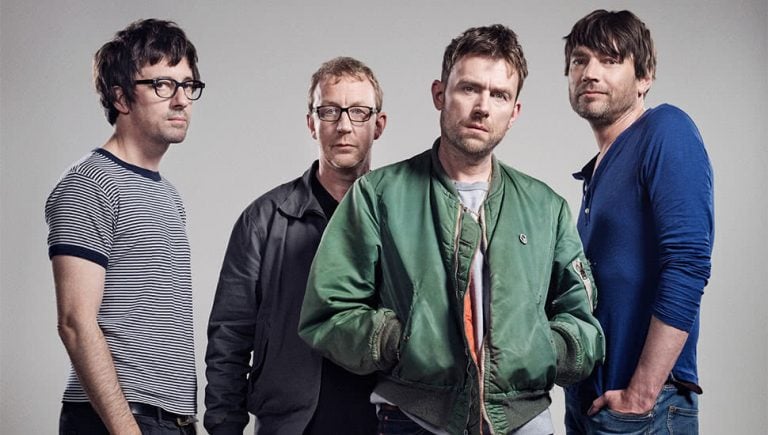
As one of the main representatives of Britpop, Blur is considered to be one of the most successful bands in their music genre. After a six-year hiatus from their music career (2003-2009), now Blur keeps performing in various parts of the world. Although Blur’s last album was released in 2015, the band’s contribution to the world’s rock music remains significant even now.

Blur Bio

Young and ambitious guys, Damon Albarn and Graham Coxon, who were Goldsmiths College students of the liberal arts and played together in the Circus band, decided to create their own team. In 1988, the Seymour band was formed. At the same time, two more musicians joined the band: Alex James, who was a bassist, and Dave Rowntree, who played drums.

However, the name “Seymour” did not stick for long. During one of their live performances, the musicians were noticed by the talented producer Andy Ross. Their professional musical career began with this acquaintance. The group was invited to work in a recording studio and was advised to change the name.

Since that time, the band has been called Blur. As early as 1990, the group went on tour across Great Britain. In 1991, the first album, Leisure, was released.

Members

Blur’s main members —  vocalist Damon Albarn and guitarist Graham Coxon — met in 1980 in the English town of Colchester. The guys were 12 and 11 years old, respectively, went to the same school, and were both fond of music. On this basis, they became friends and even put together a couple of “amateur ensembles” that did not have much popularity with the public.

After school, Coxon entered Goldsmiths College in London, and there he met the third member of the future Blur band, Alex James. There, Coxon again met Albarn, who was taking music lessons at the college. At that time, Albarn wanted to organize his own group, changing its composition and name. Graham Coxon joined his band Circus and then introduced Albarn to James. The fourth member of Blur’s upcoming roster, Dave Rowntree, was also brought in by Coxon to Circus.

Interesting Facts

Here are some facts about Blur that have taken place throughout their music career.

  • Blur did not choose to go on their US tour on their own. By 1992, they had $100,000 in debt, and in order to pay off their debts, the guys were forced to tour the United States.
  • In 1996, at the Sanremo Music Festival, the band performed in an unusual lineup: instead of guitarist Graham Coxon (who “just got fed up with TV live”), there was his plywood figure, and instead of bassist Alex James, there was the band’s bodyguard.
  • Blur split in 2003, but the band reunited more than once to play the show as a full lineup from time to time. One of their biggest performances was at Great Britain’s 2008 Summer Olympics, where they headlined the closing ceremony.
  • In the summer of 2009, Blur returned to the stage after a long silence and performed triumphant concerts at the Glastonbury Festival, Hyde Park, and other venues. In 2010, the band released their highly anticipated single, Fool’s Day, for the first time since their last single, Good Song, had been released in 2003.

Two years later after the Good Song release, Blur presented just one single, Under the Westway/The Puritan. It included two eponymous songs, and it did not manage to claim high positions in music charts.

Albums: Discography

  • Leisure is Blur’s debut album that was released in 1991.
  • This was followed by the second album Modern Life Is Rubbish, which the audience had a chance to hear in 1993.
  • In 1994, the band’s landmark album Parklife was released.This is a record that is associated with the Britpop style. 
  • The Great Escape album was released in 1996 in the wake of the success of the Britpop movement.
  • The album named after the band, Blur, which was released in 1997, opened up new sides of the musicians’ talent.
  • In 1999, the album 13 was released — again, very different from what Blur had done earlier.
  • Think Tank (2003) is the last album before their hiatus.
  • In April 2010, Blur’s first new track, “Fool’s Day”, was released.
  • The band’s latest album to date is The Magic Whip, which was released in 2015. 

In total, the discography of Blur counts eight studio albums.

Awards

The hugely popular songs “Beetlebum” and “Song 2,” influenced by indie rock and low-fay, took the first lines of the charts and were illustrated with video clips. They were the nominees for MTV and NME Awards.

The singles To the End and Parklife allowed the band to emerge from the shadows of the competition and become a musical sensation. Blur has received four iconic awards (for Best Group and Best Album) from the BRIT Awards.

For their 10th anniversary, the Blur group organized an exhibition dedicated to their work, and a book about the history of the band was also published. Nowadays, the musicians continue to perform and receive awards in the nominations for “Best Single” and “Best Video Clip.”

Britpop history

Britpop is an alternative rock genre, a revival of the dominant guitar style of 60s pop on the UK music scene in the 90s. Britpop emerged as a response to the popular grunge movement.

Britpop in the 60s

In the 60s, The Kinks were considered the founders of Britpop. After the group was denied entry to America due to the harsh social essence of their lyrics, they were less psychedelic than other British invasion groups, and in 1966 they released their first Britpop album, Face To Face. The following two works by the musicians called ‘Something Else By The Kinks’ and ‘The Kinks Are The Village Green Preservation Society’ became the standards of the genre. The Britpop melody of The Kinks was a mixture of English beats from the early Beatles and music hall traditions.

Origins

The modern origins of Britpop lie in post-punk and indie rock (in particular, such bands as Stone Roses, Smiths, Charlatans). It is believed that the term “Britpop” was first used by journalist and member of the punk band Goldblade John Robb in 1987. This is how he characterized the music of The Stone Roses. In 1997, this word earned a place in the Oxford English Dictionary.

The style flourished in 1994 when Blur released their cult records Definitely Maybe and Kurt Cobain’s Nirvana, the bulk of rock fans split into those who remained faithful to the American concept and those who began to welcome the British wave. The dominance of the world of rock again passed to the UK. America reserved the right to develop punk rock and its various branches: grunge, post-grunge, new metal, California punk, etc. In the third millennium, Britpop was recognized there as well. For example, The Killers and The Strokes emerged – bands that were undoubtedly influenced by the British “guitar” wave.

Britpop in the CIS countries

In the mid-90s Britpop gained a reputation as a separate direction in rock music. Over time, the wave reached the countries of the former USSR (However, there is an opinion that the genre originated in Russia independently, and the ancestor was the Wine group). It all started with the Baltics. The pioneers of Britpop are the Lithuanians “Biplane” (1995), who perform songs in both Lithuanian and Russian. 

The more successful group is the Brainstorm. Their hit “Maybe” won listeners not only in the CIS but even in the UK. The group that brought Britpop to Russia was Mumiy Troll and their leader Ilya Lagutenko. Having lived for a long time in England, he decided to adapt the original British direction for Russian-speaking listeners. In 1997, their first album “Marine” was released, which was recorded in London at Alaska Studios. The sound engineer was Chris Bandy, who previously worked with Cure, Duran Duran, Rolling Stones, Tears For Fears, and others. 

Russian companies “Soyuz” and “Polygram” considered the demo version of the album as “non-format” and refused to release it. As a result, the album was released by “Rec Records”. In the same year and on the same label, “Ikra” was released. The lyrics, music, and sound of the group turned out to be fundamentally new for Russia. 

In the CIS countries, the traditions of “Russian rock” were still strong. Later in Russia and Ukraine, such performers as Zemfira, Cartoons, Dancing Minus, Dream, Oedipus Complex, Thomas, Tonight, Okean Elzy, and others became popular.

Nowadays, the hysteria about Brit-pop has noticeably subsided, but Britpop itself is still developing and has plenty of fans. Moreover, its influence has spread all over the world, and almost everywhere, from America to Russia, you can find numerous brands that sound very like the original Britpop.

Many popular artists of this genre have also appeared. The fact is that the original Britpop, despite the root of “pop”, was still just rock music. Nowadays, plenty of people prefer this genre of music only, considering it the one of the highest quality.

If we take the purely pop singer Robbie Williams, then we can hear in many of his songs how Brit-pop sounds exactly in pop-musical form. Much the same can be said for the guitarless band from Sussex called Keane.

Main representatives

As we have previously mentioned, there are plenty of representatives from around the globe. The most well-known ones are the Kinks, Oasis, Stereophonics, Suede, Manic Street Preachers, Glasvegas, Cast, The Stone Roses, and Soundivers.

Converters worth your attention

If there is a need to convert an audio file, it is impossible to do it without a converter. By the way, nowadays it is even possible to convert videos to MP3 with the help of YouTube to MP3 converters. But now, let’s focus on audio converters.

Media.io

This online audio converter can be found at the link https://www.media.io/. It is worth mentioning right away that it can be viewed from different angles because the browser version of the converter differs significantly from the desktop version, which is paid. Among the features of the browser version stand out:

  • the ability to convert only 2 files;
  • saving files both on your computer and on the cloud server;
  • free use;
  • an impressive number of supported formats (MP3, FLAC, WAV, M4A, WMA, and others).

As for desktop versions of this program, they open up incredible converting possibilities: you can even change the audio format by downloading entire folders. Here are the main features of the desktop version:

  • the minimum price is $40 for using a personal account for a year, a lifetime license is$ 60;
  • according to the developers, the conversion is 30 times faster than using any other converter (according to information from the official website);
  • applications can be downloaded for both Windows and Mac.

This option is a very nice one if you need to convert files frequently, especially if you deal with a large number of files where there is a need for batch conversion.

Online Audio Converter

Now let’s take a look at an alternative to the previous batch processing option, which is also completely free. Online Audio Converter makes it possible for users to simultaneously convert a large number of tracks. Like the previous options, this audio converter supports all popular formats, allowing you to convert to MP3 and more.

Pay attention that the key feature of this service is that it can convert video to mp3 – that is, make audio files from video recordings, which favorably stands out among the previously reviewed converter. This can be useful, for example, if you have heard music in a movie or some video, but you simply cannot find it. In this case, the conversion will come to your aid.

Among the key features, a variety of settings should also be highlighted, including:

  • recording quality;
  • bitrate;
  • the number of channels, as well as their frequency;
  • removing voice from recording and much more.

An interesting feature is also the fact that you can upload audio recordings to the converter not only from your computer but also from any cloud storage. 

Convertio

Convertio is another example of an online music conversion service that offers both a free version and a subscription option that costs 12 dollars a month. As for the conversion itself, with the help of this tool, you can work with almost any file, and as for music, the service copes almost perfectly with any formats: ogg, wav, flac, mp3, wma … Users highlight a huge number of server advantages, which include:

  • batch processing;
  • attractive and simple interface;
  • work with cloud storage;
  • an impressive number of formats.

The difference between the paid version and the free version is the number of files that you can convert at the same time. For this reason, the service can be used free of charge if you do not need constant batch processing. If you have a free version, then you can convert only two files at once, but after that, you can upload an infinite number, the limitation applies only to parallel processing.

Speaking about the paid version, you can convert about 50 files simultaneously. 

Diktorov.net

And finally, let’s take a look at a very simple Russian audio file converter, which can also be used to perform simple tasks. It is called diktorov.net. Its features include:

  • processing only one file at a time;
  • a small number of supported formats (WAV, MP3, FLAC, OGG, AIFF, M4V);
  • simplicity and speed of conversion;
  • the ability to set simple settings (bit rate, number of channels, compression).

In any case, the choice is yours, each of the tools is good in its own way and has its own advantages and disadvantages. It is necessary to choose based on your tasks and in accordance with the required functions, formats, speed, and the number of concurrently processed audio recordings. It is not worth spending money on a paid converter if you only process files occasionally, but if this is part of your work, it may be worth resorting to the features of the paid services.

Essential DJ Equipment For Beginners

Music… music is everywhere. It becomes an integral part of our life. Any party cannot be without a musical accompaniment. And the main figure at any party – DJ. However, it is impossible to make a party without professional equipment. Today, professional DJ equipment costs a lot of money, and the main thing to do when choosing equipment is to look closely at the functions and capabilities.

Who is a DJ?

A DJ is a person who puts on music at a party. Its task is to create the right atmosphere so that guests do not get bored and, if necessary, dance. To do this, the DJ must have some kind of collection of music and the ability to work with it.

DJs play in nightclubs, private parties, weddings and banquets, restaurants and bars, raves, and dance festivals.

Often a DJ is also a musician at the same time: he writes his music, processes someone else’s, does voice acting for advertisements, films, writes soundtracks, mixes, and prepares other people’s works for publication. All super successful DJs are known primarily as musicians or remixers.

A DJ is a job in the service industry. There are many creative elements in it. So, the core of a modern DJ setup is a computer, most often a laptop, with a powerful processor to which a professional sound card and a midi controller are connected, sometimes the set is supplemented with decks and an external mixer. In this article, we will try to consider in detail everything you need to start a DJ career.

Headphones

Every DJ should have a pair of good headphones that greatly enhance the performance. They are primarily used for personal listening to tracks. First of all, headphones must meet some important parameters:

Insulation

Headphones are used to navigate the work with works right on stage. You should get a clear and loud sound that will be heard even in the noisiest place.

Comfort

Since the headphones will be either on the neck or the head for a long time, they should not be inconvenient. If you feel uncomfortable in the headphones, it will not in the best way affect the performance.

Cord length

Make sure the headphone cord is long enough as the DJ’s activities are quite fluid. At the same time, the cord should not be too long, otherwise, it will become tangled.

Strength

Sturdy accessories will last much longer. Headphones are constantly damaged in the bag, on the neck, and head. Therefore, it is still better to spend money once on good headphones than to constantly buy new ones.

Notebook

The computer must support the software required to create electronic music. It’s safe to say that most modern laptops are suitable for DJing.

If you decide to buy a new laptop, pay attention to the characteristics of the models, decide which parameters you want to pay more attention to.

USB ports

The laptop must have at least three USB ports. In this case, the more the better. Most controllers require two ports, and you also need to connect something else, like a mouse. If there are not enough ports, you can always buy a USB hub.

Battery life

While you are likely to plug your laptop into the mains while you work, a good battery will be a great backup in case you cannot recharge your device. A DJ needs to be able to work with music while on the go.

In addition, with the growing popularity of mobile devices, as well as the emergence of powerful iPad PRO, more and more DJ programs appear in the mobile segment. Along with this, it becomes possible to simplify your DJ setup.  All you need is a tablet, adapter and mixer. Such software like Traktor is already on mobile platforms.

Mixer

There are many types of controllers and mixers. Look for a controller that connects to your computer via USB, has a built-in sound card and audio interface because they are simpler to connect and operate than other mixers. Using the sound cards of the controller and computer allows you to hear what sounds in the main microphone and headphones.

Software

There is various DJ software out there, and it is not easy to single out one as the best. The most popular programs are Traktor and Virtual DJ. Well, every DJ chooses the software to his taste. We advise you to try several free trial versions and determine for yourself which one to purchase for permanent use.

For example, Traktor. The program can be controlled with just one computer – a key and a mouse, or controlled by numerous Native Instruments controllers.  But it is not at all necessary to be limited to “native” controllers, hardware of any other manufacturer is also easy to configure in the program interface.

Turntables

Designed to be played from vinyl or CD. The quality of the set itself depends on the characteristics of this equipment. The turntables of vinyl discs are quartz (the motor is connected to the rotating part directly) and belt (connection through a belt). One of the main definitions of good turntables is Pitch-control, which is used to adjust the speed of the composition. To keep the turntable mechanisms in good condition, so-called slipmats can be purchased so that the rotating part of the turntable does not slow down when scratching, for example. To play from CDs, pitch-control in turntables is required.

What is the difference between a keyboard and a workstation?

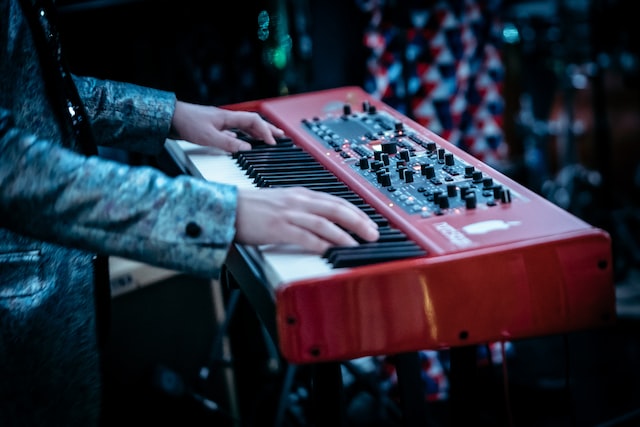
How is a keyboard instrument different from a workstation?  Basically – nothing, the sound shaping chain is the same anyway: keyboard, tone generator, effects processor. However, additional functional blocks such as sequencer or harmony and form factor separate these devices quite clearly into categories.

Besides the midi-keyboard, there are several other devices that work on the same principle, that is, electronic keyboards. Let’s try to understand the nuances of this technique.

Digital piano

A digital piano is the simplest keyboard device in terms of electronics: a minimal assortment of timbres, simple effects for imitating the sound of a hall.  All efforts in creating such instruments are aimed at neutralizing the difference in feel from playing them and traditional acoustic pianos. This is facilitated by a weighted 7-octave hammer action keyboard and a solid floor body with classic pedals. The digital piano also most often has a cover to keep dust out of the keys, and a music rest, which is a music stand.  The price of an instrument equipped with a full keyboard and an acceptable tone generator usually does not go below two thousand dollars. 

However, in a concert grand piano, the timbre also changes slightly from note to note, since the strings differ in number (three strings per note at the top, one in the bass), braiding material, length, and also the weight of the hammer.  It also recreates resonances when the pedal or other keys are pressed, and the natural decay of notes when the pedal is not fully pressed.

Midi keyboard

A MIDI keyboard is a keyboard-type instrument that is only used to record parts of other instruments.  It also allows you to quickly control the software used to process the received audio data. A laptop or stationary computer is used as a connecting link.

Some users are mistaken that MIDI can be used separately from the recording system. However, the keyboard will not sound unless you connect it to your computer.

 A distinctive feature of MIDI is the absence of timbres and built-in effects, as well as speakers that could play sound.  Therefore, a connection to a PC is required.  Also, the keyboard is configured through the software.

The advantage of midi keyboards is that they have digital input and output functions. This eliminates the need for a separate audio interface when used as a digital audio workstation.  But for live performance, a synthesizer with outputs for mixers, amplifiers and speakers is more suitable.

The smallest MIDI keyboards and synthesizers have only 25 keys, while full-size digital pianos and organs can be operated with 88 keys. The right choice for you depends on how much space you have to place the keyboard, its portability, and the music you plan to play.

Synthesizer

A synthesizer is essentially a textbook device that allows you to get the desired sound by pressing the keys.  There are no tools for recording the game in synthesizers, as well as other systems that help create a composition.  Today synthesizers are used primarily in recording studios and at concerts – for playing live.  There are many types of synthesizers, but one thing is clear: they are hardly suitable for the role of a universal home instrument.

Music workstation

The music workstation is potentially the most powerful standalone solution for composers who reject templates and stamps.  The stations do not have automatic accompaniment and other means that make it possible to rivet a song quickly and ingeniously.  However, in manual mode, you can do almost anything you want.  Like the best keyboard arrangers, flagship workstations allow you to create studio-quality compositions, including adding live instrument tracks and vocals (mic input and basic audio processing are available on many models, although the mic itself is not included).  A kind of compact home studio “in one box”.  The cost of truly outstanding models ranges from 4,000 to 7,000 US dollars, and simpler options are offered for more than 3 thousand dollars.

The workstation combines:

Piano keyboard

Like most keyboards, the music workstation has a full piano-style keyboard.

Drum machine

Sooner or later, you will want to create drum samples. And workstations have ready-to-use solutions on board.  In reality, the drum machine is more often presented in a virtual form.

Synthesizer

That is where the signal processing algorithms are loaded, and it is the very node that synthesizes the sound. Maybe without a keyboard, since in this context it is generally a computer program.

Sequencer

 The main emphasis is placed on recording, processing and playback of midi messages. In practice, this means that if you do not like the sound of the instrument that you recorded, then you can easily change it and put, for example, instead of the sound of a guitar, the sound of a church organ.

However, for professional work, a computer studio is potentially better in everything (a computer with a monitor, a MIDI keyboard, an audio interface) and licensed software, including sound libraries, then it can be even more expensive than the best keyboard station, and it will be disproportionate in setting up and using more difficult.  In this regard, the keyboard station is much more attractive: you can work immediately after plugging into the outlet, there is an instruction with a detailed description of each operation, and using an arsenal of functions is no more difficult than operating a smartphone.  But even the best keyboard stations are not suited for active recording of live instruments and processing / editing of such tracks.

About Blur Band

The legendary British band Blur – the founders of the “Brit-pop” style, winners of a huge number of music awards. The band was born in the late 80s of XX century in London (UK). The original line-up: Damon Elbarn (vocal, author of texts and frontman of the band), Graham Coxon (guitar), Alex James (bass guitar) and Dave Rowntree (drums). The first full-fledged album of the group “Leisure” was released in 1991.

The history of creation

The group was founded by two childhood friends, Damon Albarn and Graham Coxon, who went to college together. Originally Damon Albarn played in another band, but due to changes in the line-up, he was soon joined by college friends Graham Coxon and Alex James. In this line-up, together with drummer Dave Rowntree, the band gave its first concerts in the summer of 1989.

One day during a live performance, a very unpleasant incident occurred with the band. They performed in one of the nightclubs, while some drunk visitor sprayed a gas can. The entire group spent the evening after the concert in the hospital, blindfolded.

The band came to the name Blur not at once, but only after the newly baked musicians were interested in the representative of the recording company Food Records. After heated debates and various options, the band members stopped at the bright and unusual name Blur. And already in 1990 the band goes on their first tour in Great Britain, and in October the first single called “She’s so high” is released, which is very warmly received by both public and music critics. The band was talked about in the most prestigious British music magazines, such as NME.

Blur

In 1991, the first studio album called “Leisure” was released, but the difficulties the band encountered while recording the album did not allow it to make any headway in the British charts.

In 1992 the band goes on tour to the USA, but numerous concerts bring only disappointment to the band members: America did not understand and did not accept the new British wave. Returning to England, Damon Albarn sat down in the studio to write material for the band’s new album. And so in 1994, a record called “Parklife” is released. The first track from this album titled “Girls & Boys” was well received by BBC Radio 1 and hit the top lines in the British charts. As a result, the album “Parklife” gained extraordinary popularity and held the first place in the charts of 90 weeks.

Blur Band

The long-awaited fame came, and the band won four awards of the famous BRIT Awards 1995 in the categories “Best Group” and “Best Album”.
Around this time, a real confrontation with the Manchester rock band Oasis began between the band Blur. It is surprising that the band members not only competed, but also felt an outright dislike and disgust towards each other. The apotheosis of the rivalry was the release of new singles of both groups on the same day.

By the end of the week the single of Blur group called “Country House” was selling much better than “Roll With It” Oasis (in ratio of 274 thousand copies to 216 thousand copies).

In early 1998, the band started recording another studio album of the band called “13”. The musicians immediately gave up the services of their previous producer Stephen Street and decided to work on a new sound. Having not found a producer yet, they decided to record three songs with the famous electronic musician William Orbit. It turned out that working with Orbit was very productive and interesting, so in the end Blur decided to record an album under his guidance.

Young Blur Band

After that, the band had several successful albums. To date, the last studio album of the band is “Think Tank” 2003. Since 2004, the band was on the verge of disintegration and did not produce new material. For six years the members of the group actively participated in the creation of other interesting projects. For example, Damon Albar, organized a virtual group called Gorillaz, which released two successful albums. In addition, he wrote a Chinese opera, gathered a new group to create the album The Good, The Bad And The Queen.

Guitarist Graham Coxon was engaged in a solo career all this time, drummer Dave Rowntree hit politics, and bassist Alex James went into business.

Nevertheless, in summer 2009 Blur returned: they gave several successful concerts at the famous British music festival Glastonbury. Although, there were quite significant changes in the composition of the band, as one of the founders of the band – guitarist Graham Coxon left. The year 2010 was marked by the fact that the band released a long-awaited single called “Fool’s Day” – the first joint work of the band since 2003.